
Can Laser Therapy Help Vaping? A Calm Quit Plan
A vape can be in your hand before you have fully noticed the urge. It happens in the car, between meetings, after a meal, or during a stressful moment at home. That speed and repetition are why many adults ask, can laser therapy help vaping when gum, patches, pills, or trying to quit cold turkey have not felt right for them?
For some people, low-level laser therapy can be a supportive part of a quit plan. It is a drug-free approach designed to help clients feel calmer and more in control as they step away from nicotine. It is not a magic switch, and it does not erase the need to change routines. But when it is paired with personal guidance and a clear plan for cravings, it may make a difficult transition feel more manageable.
Can Laser Therapy Help Vaping Cravings?
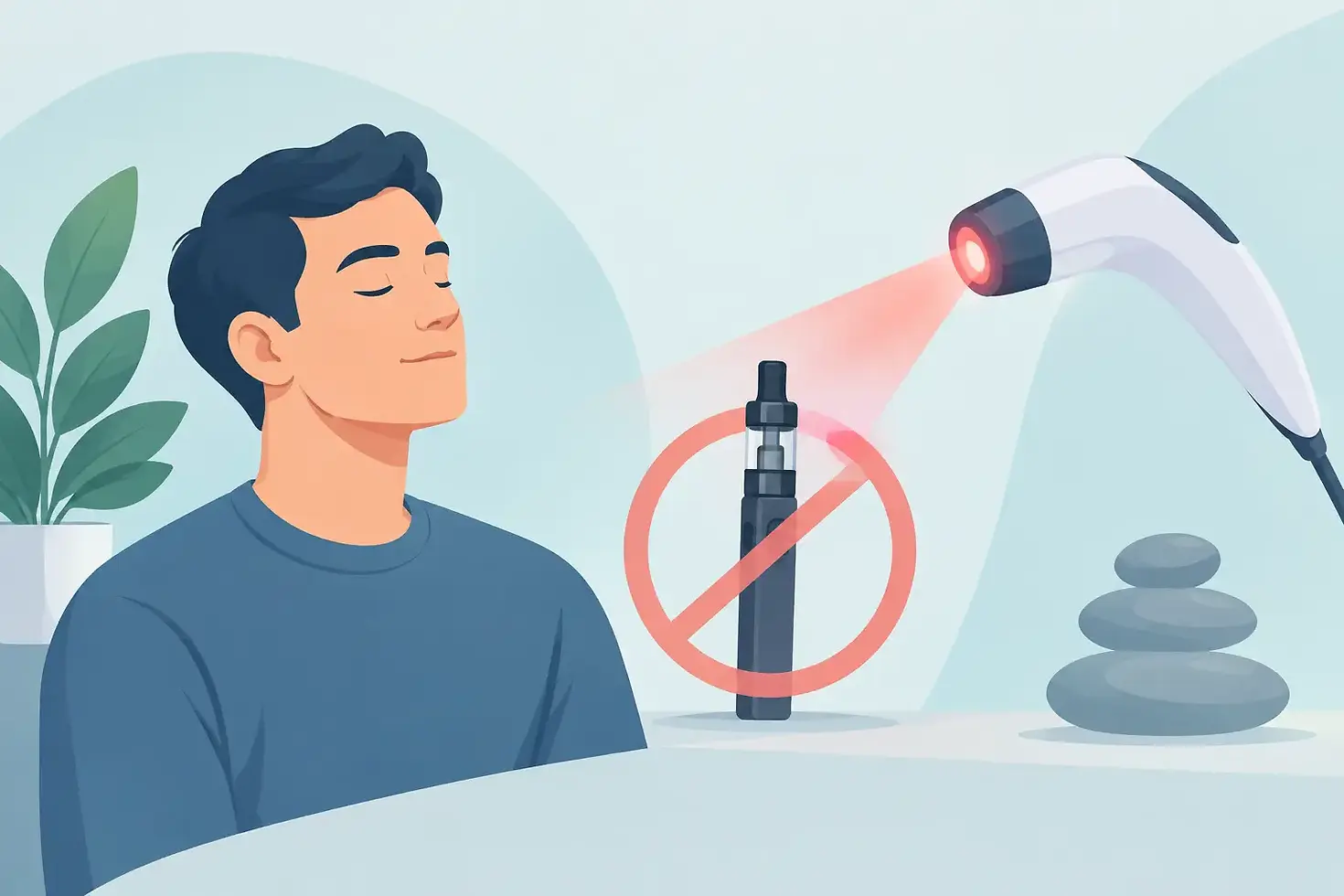
Low-level laser therapy uses a gentle, non-invasive laser applied to specific points commonly used in acupuncture-based wellness approaches. There are no needles, medications, nicotine products, or recovery time. A trained technician places the laser at selected points during a short session, with the goal of supporting relaxation, comfort, and the body's adjustment as nicotine is removed.
The experience is usually calm and painless. Many clients use the appointment as a turning point: a dedicated moment to say, "I am finished with vaping," and begin practicing a new response to stress, boredom, and routine triggers.
The research on laser-based approaches for nicotine cessation is still limited and mixed. That matters. No responsible provider should promise that a laser treatment alone will make every person quit or guarantee that withdrawal will disappear. Nicotine dependence has physical, behavioral, and emotional layers. The most useful role for laser therapy is as supportive care within a thoughtful, individualized quit effort.
For adults who want to avoid nicotine replacement or prescription medication, that support can feel especially appealing. The goal is to help you move through cravings with less fear and more structure, while you build the habits of a non-vaper.
Why Vaping Can Be So Hard to Leave Behind
Vaping is often marketed as convenient, discreet, and easy to control. In reality, that convenience can make it harder to recognize how often nicotine is being used. A device can be available all day, and a few quick puffs can become connected to nearly every part of daily life.
The nicotine itself can create physical dependence. When you stop, you may notice irritability, restlessness, low mood, trouble concentrating, stronger appetite, or intense thoughts about taking just one puff. At the same time, the habit can be tied to coffee, driving, work breaks, social situations, alcohol, gaming, or winding down at night.
That is why willpower alone can feel exhausting. You are not only letting go of nicotine. You are replacing a familiar pause button that has been woven into your day.
A complete approach recognizes both sides of the challenge. It addresses the physical discomfort you may feel when nicotine is gone, while also helping you prepare for the situations that have kept the vaping cycle going.
What a Laser-Supported Quit Appointment May Include
At Stop Smoking Laser Solutions, the focus is not simply on getting through one appointment. It is on helping you begin a healthier identity with a plan that works in your real life. Because the service is mobile, treatment can take place in the comfort of your Long Island home or workplace, without adding another stressful trip to your schedule.
A typical session lasts about 30 minutes. Your technician will discuss your vaping pattern, previous quit attempts, common triggers, and your reasons for wanting to stop. The low-level laser is then applied to selected points in a comfortable setting.
The conversation around the treatment is just as valuable as the treatment itself. You may receive encouragement around handling urges, changing routines, staying hydrated, and preparing easy alternatives for the moments when your hand automatically reaches for a vape.
For many clients, appetite is also a concern. Nicotine can affect hunger cues, and some people worry that quitting will lead to unwanted weight gain. A realistic plan can include nutritional guidance and practical strategies for managing snacking without replacing vaping with constant eating.
The First Few Days Need a Plan
The first 72 hours after quitting can be a sensitive period because your body and brain are adjusting to less nicotine. Rather than viewing cravings as proof that you cannot quit, treat them as temporary signals. They rise, peak, and pass.
Prepare your environment before your quit day. Remove devices, pods, chargers, and any backup supplies from your home, car, bag, and desk. Keeping one “just in case” makes it easier to restart the habit during a stressful moment.
It also helps to decide what you will do instead of vaping. You do not need an elaborate routine. A glass of cold water, a short walk, slow breathing, chewing regular gum, texting a supportive person, or stepping outside for fresh air can interrupt the automatic pattern. The key is to act quickly when the urge arrives.
Pay attention to your strongest trigger. If you vape with morning coffee, change the setting for a few days. Drink coffee on the porch instead of in the car, switch to tea temporarily, or take a five-minute walk after your first cup. If work stress is your trigger, schedule brief breathing breaks before the pressure builds.
When Laser Therapy May Be a Good Fit
Laser therapy may be worth considering if you are ready to quit, prefer a non-medication option, and want a supportive appointment that helps you make a firm start. It can also be a good fit if patches, gum, or medications did not match your needs in the past, or if you value the convenience of care that comes to you.
Readiness still matters. No treatment can make the decision for you. The clients who give themselves the best chance are honest about why they vape, willing to remove access to nicotine, and prepared to practice new responses when discomfort shows up.
It may not be the only support you need. If you have severe anxiety, depression, a history of substance use concerns, or feel unable to manage withdrawal symptoms, speak with a qualified healthcare professional. Pregnant individuals and people with specific medical concerns should also seek medical guidance before beginning any cessation program.
There is no shame in using more than one kind of support. Behavioral counseling, medical care, quit coaching, and encouragement from family can all have a place. The right plan is the one that helps you stop using nicotine safely and sustain the change.
Give Yourself a Different Kind of Break
A vape break may have been your way to pause, reset, socialize, or get through a hard moment. Quitting does not mean you have to lose every break in your day. It means you can create breaks that actually support your health.
Start small and make the choice concrete. Tell one person you trust. Pick your quit date. Clear out the devices. Schedule support. Then let each craving you move through become evidence that you can handle life without nicotine.
You do not have to wait until you feel perfectly ready or completely fearless. A calmer, healthier, more confident non-vaper can begin with one clear decision and the support to keep it going.


Comments